
9 Commercial Printing Myths Debunked: What’s Really True?
estimated reading time: 5 minutes
Debunking 9 Common Myths about Commercial Printing
If you've been ordering commercial printing for a while, whether
it's books, marketing materials, or something else, you've probably encountered
some conflicting advice along the way. Some of it stems from past experiences,
some from misinformation posted online, and some from how printing used to work
years ago.
The reality is that modern commercial printing has evolved
significantly. Digital and offset technologies are more flexible than ever,
materials are more varied, and production workflows are far more efficient. But
despite that, a number of long-standing beliefs still circulate as if they
apply universally.
This article breaks down some of the most common
misconceptions about commercial printing and replaces them with what's actually
true in today's production environment. The goal isn't to overcomplicate matters,
it's to help you make clearer, more confident decisions when planning your next
print project.
MYTH 1: Digital Printing Is Always Cheaper Than Offset Printing
Digital printing is often the most cost-effective choice for
short runs because it has minimal set-up time and does not require physical printing
plates. However, once the order quantity grows to a substantial level, offset printing becomes more
economical due to how efficiently it handles higher volumes. The transition
point varies depending on the project, but assuming digital is always cheaper
can lead to missed cost savings on larger orders. The best approach is to match
the printing method to the order quantity and the goals of the project rather
than defaulting to a single technology.
MYTH 2: Printing More Copies Just Increases Total Cost
Many people mistakenly believe doubling the order quantity will double the price. While it's true that printing more copies increases the
total spend, it often dramatically reduces the cost per piece due to the
economies of scale. This is because set-up costs, such as file processing and
press preparation, are spread across the entire run. So as the order quantity
increases, those fixed costs are distributed across more units, improving
efficiency and lowering the unit cost. For projects where reorders are likely, printing a higher quantity
upfront delivers better overall value than printing multiple smaller runs.
MYTH 3: Thicker Paper Stocks are Always Better
Heavier paper stocks are often associated with higher
quality, but whether or not they are "always better" depends on the purpose of
the project. Thicker paper can enhance perceived value, but it also increases
cost, shipping weight, and sometimes limits binding options. In many cases, a
well-chosen lighter stock paired with the right finish can achieve an equally
professional result while improving efficiency and cost control. The right paper
choice is the one that best fits the project, not necessarily the one that is
thicker.
MYTH 4: Recycled Paper Is Always the More Affordable Option
Recycled paper is a strong choice for sustainability-focused
projects, but it isn't automatically less expensive. In many cases, a recycled paper
stock will actually cost more than its virgin counterpart due to the additional processing steps
required. That said, recycled paper remains an excellent option for brands that
prioritize environmental responsibility. The key takeaway is that paper
selection should be based on a balance of budget, performance, availability,
and company values - not assumptions about price.
MYTH 5: Print Is Outdated Compared to Digital Marketing
The notion that print is outdated compared to digital
marketing overlooks how powerful print remains in today's media mix. While
digital channels may offer faster implementation, print offers a tactile, more
focused experience that actually builds trust and credibility better than
digital messaging. High-quality printed materials, such as brochures, catalogs,
and direct mail, achieve higher engagement because they physically stay in
front of the customer longer. Hence, print is actually thriving as a
"differentiator" in a crowded digital world. Though some may perceive
it as outdated, in reality, print continues to be a modern, strategic tool for
creating memorable campaigns that deliver real results.
MYTH 6: What You See on Screen Is Exactly What Will Print
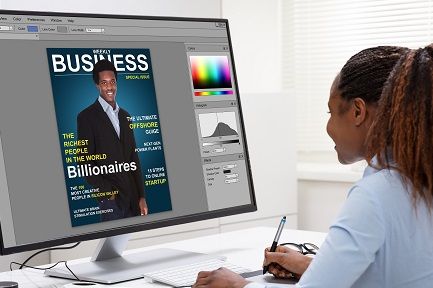
It is important to understand the potential color differences between
what you see on an electronic screen versus ink on paper. Screens display color
using RGB light, while printing uses CMYK inks applied to paper. These two color systems
behave differently, which can result in noticeable shifts between what you see
digitally and what appears in print. Paper type and coating choices can also
affect the final appearance. Proper file preparation and color management help
ensure the printed result aligns closely with expectations.
For a more in-depth explanation, visit this article: The
Difference between CMYK and RGB Color Models
MYTH 7: Printing is Bad for the Environment
Because the printing industry uses such a high volume of paper, many believe it to be a major cause of
deforestation. In reality, paper manufacturers commonly rely on sustainable
forestry practices, with replanting built into their operations. Equally important, paper can be recycled up to seven times. What often surprises people most is that the
print industry has a smaller carbon footprint than digital media. While print
typically involves a one-time emission during production, digital devices use
energy and generate emissions each time an electronic document is viewed or edited. In
addition, digital's underlying infrastructure, including data centers, servers,
and device manufacturing, carries a significant environmental impact.
MYTH 8: Once a File is Designed, It is Ready to Print
A well-designed file still needs to meet specific technical
requirements before it's truly print-ready. For example, bleed and crop
marks, margin settings, image resolution, color mode, and other layout details all play a critical
role in production quality. Even professionally designed artwork may require
adjustments to ensure it reproduces correctly on a printing press. Taking the
time to properly prepare files helps prevent delays, avoids unexpected issues,
and ensures the final printed piece accurately matches the intended design.
To learn more about print ready artwork, visit this
article: What is a Print Ready File?

MYTH 9: Printing Cannot Be Personalized
Before the emergence of digital printing presses, this
statement would have been true and not a myth. However, in today's world, it is
a myth. Thanks to digital presses having Variable Data Printing (VDP)
capabilities, commercial printers can personalize every single piece in a production
run with different names, taglines, offers, or images. So instead of delivering
the exact same marketing message to 5,000 customers, Variable Data Printing can
create 5,000 unique documents custom tailored to each individual recipient.
Color Vision - Your Partner in Commercial Printing
Established over 40 years ago, Color
Vision continues to build on its strong reputation of offering quality
printing at affordable prices.
So whether you are looking to order books, catalogs,
brochures, comics, maps, or any other printed pieces, Color Vision is your
one-stop source for custom printing.
As a full-service printer, we have both digital and offset print capabilities. This allows us to assist with just about any type of printing
need you may have.
If you would like a quote for an upcoming print project, use
our easy Quote Request form to send us your specifications and we
will be happy to email a custom quote to you. Or, if you prefer to discuss your
project by phone, we can be reached at 800-543-6299.
Don't hesitate to get in touch. We're always happy to help
clarify specifications, compare options, or talk through the best approach for
your project. We look forward to assisting you.

Pete is a member of the Color Vision team and has nearly 20 years experience in printing, design, and marketing. He writes about a wide range of print-related topics, including book printing and binding, full-color printing, paper types, and finishing techniques. His articles contain simple, straightforward explanations, helping people to better understand their printing options and make more informed decisions about their projects.
Related Articles
9 Tips for Printing User-Friendly Workbooks and Study Guides
Read This Article

10 Frequently Asked Questions about Bleed and Crop Marks
Read This Article
Installation Manual Printing: 7 Frequently Asked Questions
Read This Article

What Is the Best Paper Weight for Corporate Brochures?
Read This Article