
Self-Cover vs. Plus Cover: Which Book Cover Should I Choose?
estimated reading time: 4 minutes
Self-Cover or Plus Cover: Which Option to Use?
When printing a book, one of the decisions you will need to
make is choosing the right cover style. Two common choices for printed books are
Self-Cover and Plus Cover. Both styles are used frequently for a variety of bound
documents, but they serve different purposes.
Understanding the differences between these two cover styles
can help you choose the option that makes the most sense for your project.
What Is a Self-Cover Book?
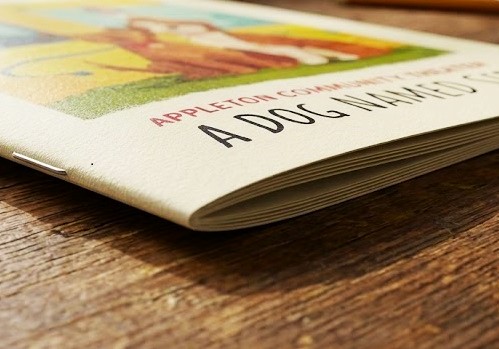
A Self-Cover book uses the exact same paper stock for the
cover and the inside pages. Instead of printing the cover on a heavier cover
stock, the entire book is printed on one consistent paper type.
For example, a comic book printed entirely on 70 lb. text
paper would be considered a self-cover publication.
Self-Cover printing is commonly used for:
- Short booklets
- Event programs
- Instruction guides
- Magazines and catalogs
- Comic books
- Thinner manuals
- Newsletters and bulletins
- Multi-page brochures
Because the cover does not require a heavier paper stock,
self-cover books are more economical than plus cover books. In addition to
forgoing the heavier cover, the manufacturing process is more efficient. This
is because the pages and cover of a self-cover book can be printed in a single
press run, as opposed to printing the pages and cover in separate runs and then
matching them up prior to the binding process.
What Is a Plus Cover Book?
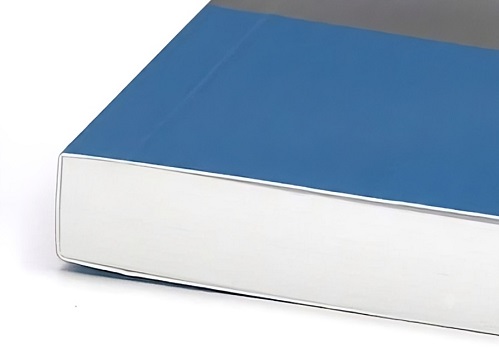
A Plus Cover book uses a cover stock that is different from the interior pages.
For example, an instruction manual that uses 60 lb. text
paper for the pages and 12pt cardstock for the cover would be considered a plus
cover publication.
Bear in mind that 99% of the time, a book is referred to as "plus cover" because the cover is made from a heavier weight of paper than the interior pages. However, if the paper used for a book's cover differs in any way from the paper used for the pages - whether it's the weight, texture, sheen level, etc. - the book is technically a plus cover book.
It is also important to note that the ink printed on either the pages or the cover has no bearing on whether a book is a self-cover or a plus cover. That distinction is based solely on the paper stock.
Because the cover is a different paper type than the pages, plus cover books require two separate press runs - one for the cover and one for the pages. The cover and pages must then be matched up prior to the binding step. This is somewhat less efficient than the production of self-cover books, which can have the cover and pages printed and bound in the same process.
A heavier cover is often chosen for projects to provide a more premium look and feel. The heavier stock can also provide more protection for the pages, especially for books that will be handled frequently.
Common examples of Plus Cover books include:
- Novels
- Premium comics
- Employee handbooks
- Graphic novels
- Thicker manuals and catalogs
- Annual reports
- Self-published books
Self-Cover vs. Plus Cover: A Quick Overview of the Differences...
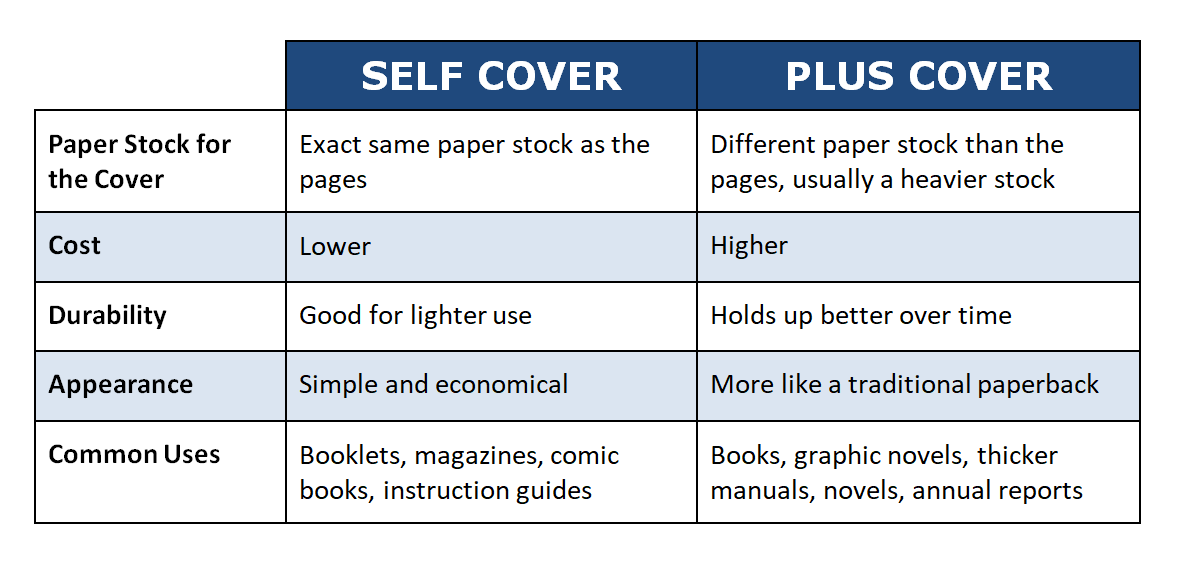
Although self-cover books are more economical, they still
look professional, especially when printed with a colorful layout. However,
plus cover books provide a more substantial look and feel that many readers
associate with a higher quality book.
When Should I Choose a Self-Cover Book?
A self-cover is often the best choice when the goal is to
produce an affordable publication without needing extra cover protection.
You may want to consider Self-Cover printing if:
- Your book has a low page count
- You prefer a more flexible book that's easy to handle
- The book will see limited use
- It is important to keep the cost per copy as low as possible
- You prefer a lighter weight book to minimize transit costs
For example, a 24-page comic book, event program, or
instruction booklet may not need a heavier cover. In these cases, using the
same paper throughout the book can provide a good balance between appearance
and affordability.
When Should I Choose a Plus Cover Book?
A plus cover is usually the better option when you want your
book to feel more substantial or ensure it holds up to repeated use.
Consider the Plus Cover option if:
- Your book has a higher page count
- You want a more durable cover
- The book will be sold commercially
- You want a more traditional paperback appearance
- The cover design includes special finishes
Many self-published authors, businesses, and organizations choose the plus cover option because a thicker stock gives the book more structure and creates a stronger first impression. A matte, gloss, or soft-touch laminate can also be added to a book's cover to boost durability and further enhance the look and feel.
Need Help Choosing the Right Cover for Your Book?
With decades of experience printing books, Color Vision
works with authors, businesses, publishers, and other organizations to help them determine
the best combination of paper, cover style, binding, and finishing options for their books.
Whether you are printing a short-run of booklets or
thousands of professionally finished books, choosing the right materials can
make a significant difference in your book's appearance, durability, and budget-friendliness.
If you are unsure whether a self-cover or plus cover is the best fit for your book, contact us at 800-543-6299 and we'll be happy to help you explore the options that make the most sense for your particular project.
Or, if you already know the specifications of your book and are ready for a quote, fill out our simple Quote Request form and we will send you a custom quote by email.
We hope to hear from you soon and look forward to assisting with your next book project!

Pete is a printing industry writer and content creator employed by Color Vision Printing. With two decades of printing, design, and marketing experience, he writes about a wide range of print-related topics, including book printing and binding, full-color printing, paper types, and finishing techniques. His articles contain simple, straightforward explanations, helping people to better understand their printing options and make more informed decisions about their projects.
Related Articles

Book Printing: What Is a Dummy?
Read This Article
Book Printing: What Is a Book Block?
Read This Article
9 Tips for Printing User-Friendly Workbooks and Study Guides
Read This Article
Self-Cover vs. Plus Cover: Which Book Cover Should I Choose?
Read This Article