
Why Color Printing Costs More than Printing in Black Ink
estimated reading time: 6 minutes
Full Color Printing vs. Black Ink Only: What Affects the Price?
At Color Vision, one question our customer support team
hears regularly is why full-color printing costs noticeably more than standard
black ink.
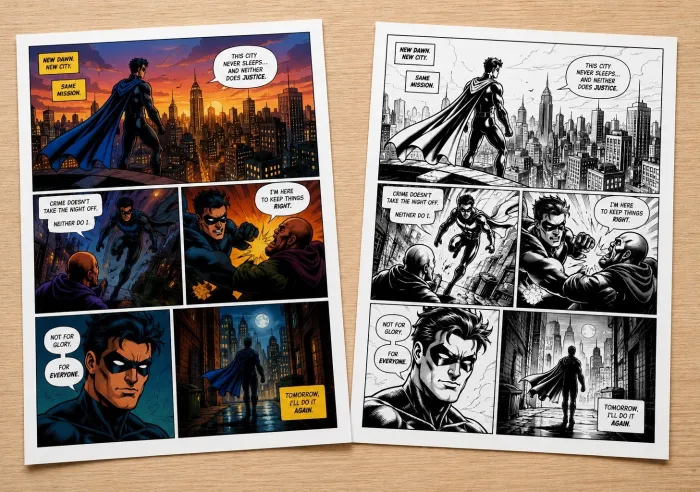
At first glance, switching from black ink to color seems as
simple as changing a print setting. On the production floor, however, full
color transforms the entire manufacturing process. It requires four separate
inks, tighter mechanical tolerances, specialized paper considerations, and
active monitoring from make-ready through the entire press run.
Here is an inside look at the production factors
that drive the cost difference between full-color and black-only printing:
1. Ink Colors: Four vs. One
The fundamental cost difference begins at the press itself.
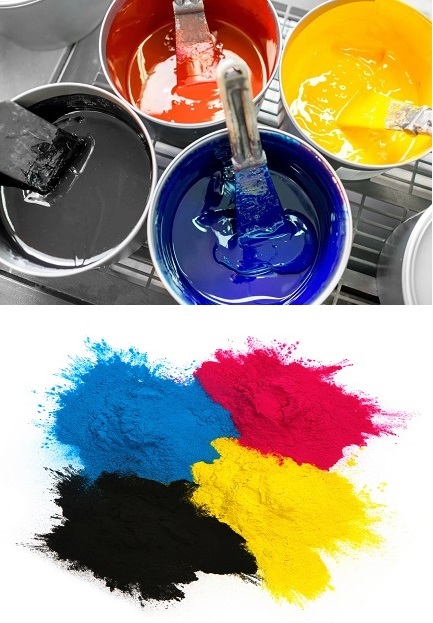
Printing in standard black requires just a single ink color, while full-color
printing relies on the four-color process known as CMYK: Cyan, Magenta, Yellow,
and Black (Key).
These four CMYK inks are laid down sequentially in
microscopic dot patterns to produce the illusion of thousands of distinct hues:
On an offset press: A black-only run requires creating just one
printing plate and mounting it on single inking unit. A full-color run requires
four separate printing plates with four individual inking units that must be adjusted
and maintained individually.
On a digital press: A black-only run uses one color of toner
or liquid ink. Full-color printing uses four separate color stations, laying
down four distinct toner powders or inks.
Because full color printing requires four inks to work
together, maintaining registration (the exact alignment of each color layer) is
critical. If any color shifts by even a fraction of a millimeter, the entire
image will appear blurry or misaligned with visible color halos.
During a color press run, our operators pull
test sheets from the delivery section to inspect registration under a
magnifying loupe. Offset press operators also continuously calibrate the flow of the four CMYK inks,
monitor water-ink balance, and fine tune roller pressures to ensure every sheet
is printed with precision.
By contrast, a black-only job bypasses color-to-color
registration entirely. Setup time is significantly faster, make-ready waste is
minimized, and the press operator needs to monitor only a single ink station.
From the Pressroom: What Does Make-Ready Mean?If you want a behind-the-scenes look at the activities our Offset Press Operators perform during the Make Ready process, be sure to read our article: Offset Printing: What is Make Ready?
You will often hear printers use the term "make-ready." This refers to the setup phase for an offset press where our operators load paper, align printing plates, adjust inking rollers, and run test sheets through the press to calibrate color balance and registration before running the full job. Because a four-color run requires four plates to be aligned to a fraction of a millimeter, it requires more set-up time and generates more test sheet waste than a single station black-only job.
2. Ink Coverage and Pressroom Demands
Ink costs are determined not just by how many colors are
used, but by Total Area Coverage (TAC) - the physical volume of ink transferred
to the sheet.
A standard text-heavy document, such as a black-and-white
training manual, uses ink only where words hit the paper. The white background
remains completely untouched. As a result, typical ink coverage on a black text
page might be only 5% to 10%. Less ink is consumed, and the sheet passes
cleanly through to the delivery end of the press.
Full-color work tells a completely different story:
Layered Ink Volume: High-resolution photographs, bold
graphics, and saturated background panels require multiple CMYK colors layered
on top of one another. For example, using a "Rich Black" ink build to create a deep
black background requires heavy doses of Cyan, Magenta, and Yellow in addition
to the Black ink. Because multiple ink colors are applied, this can push total
ink coverage per page to within the 200% to 300% range.
Drying Times and Setoff Prevention: Wet ink applied in heavy
layers does not dry instantly. To prevent setoff (where the wet ink from the
front of one sheet transfers onto the back of the sheet stacked directly on top
of it) operators must carefully apply a fine anti-setoff powder between
delivered sheets and allow the printing to cure before cutting, folding, or
binding.
Production Speed: Heavy ink coverage requires lower press
speeds and diligent visual inspection to ensure offset ink has enough time to
set, and digital toner has enough time to fuse to the paper, between
impressions.
When comparing a 16-page text-only instruction booklet to a
16-page full-color product catalog, the catalog can easily consume 20 to 30
times more raw ink by volume and require significantly more press room labor to
manage properly.

3. Paper Selection and the Chemistry of Color
Ink and paper do not operate independently; how they
interact determines the final sharpness, color depth, and price of your piece.
Standard uncoated paper stocks (such as 50# or 60# offset
paper) work exceptionally well for black-only text documents like technical
manuals or novels. Because black text relies purely on high contrast rather
than subtle tonal blending, the natural porosity of uncoated paper fibers is an
advantage - it absorbs the single ink cleanly without glare.
When you introduce full-color imagery, the mechanical
demands on the paper increase dramatically:
Dot Gain on Uncoated Sheets: When wet CMYK inks hit uncoated
paper, the liquid ink soaks deep into the paper fibers like water on a paper
towel. This causes the halftone dots to spread - an industry phenomenon known as dot
gain. On uncoated sheets, heavy CMYK photos can look flat or muted unless the
prepress team carefully compensates for dot gain during file calibration.
Coated Papers for Image Sharpness: To achieve more photo-realistic
colors, projects typically require coated stocks (such as 80# or 100# gloss or matte
text and cover). The surface coating creates a sealed barrier that allows the
ink pigments to rest on top of the sheet rather than soaking into the fibers. This
keeps the ink film uniformly thin and level, which maximizes the clarity of
light reflecting off the sheet, giving images a high degree of detail.
Material Cost Differences: Higher-grade coated stocks,
heavier basis weights, and specialty digital-compatible sheets carry a higher
raw material cost than basic offset papers. Furthermore, because full-color work
often involves critical promotional materials, clients generally opt for
heavier paper weights to match the visual quality of the printing.
A Quick Summary
Full color printing costs more than printing in standard
black ink because it requires:
More ink colors - four versus one
More complex setup - especially when printing on an offset press
More precise monitoring - to keep the different ink colors in register
More coverage - color images place more ink on the sheet
More reliance on coated paper stocks - such as gloss or
matte
Get Straightforward Answers for Your Print Project
Every print job must strike a balance between budget and
visual impact. Sometimes black ink on a light colored stock delivers the clean
aesthetic you want at a fraction of the cost. Other times, full-color printing
on premium coated paper is necessary to showcase your offerings in the best
possible light.
With more than four decades of pressroom experience, the
Color Vision team is here to help you weigh those trade-offs before your job
hits the production floor. We can discuss your goals, review your paper
options, and identify the most cost-effective way to run your project without
compromising on quality.
Ready to see exact pricing? Submit your project details through our Quote Request form for a clear, itemized estimate, or call our print specialists directly at 800-543-6299.

Pete is a member of the Color Vision team and has nearly 20 years experience in printing, design, and marketing. He writes about a wide range of print-related topics, including book printing and binding, full-color printing, paper types, and finishing techniques. His articles contain simple, straightforward explanations, helping people to better understand their printing options and make more informed decisions about their projects.
Related Articles

Printing Terminology: What is CMYK?
Read This Article
Offset Printing: How do PMS Colors differ from the CMYK Printing Process?
Read This Article