
Book Printing: What Is a Dummy?
estimated reading time: 4 minutes
What is a Book Dummy...and When Do You Actually Need One?
For over four decades, Color Vision has been helping authors, publishers, and businesses bring their book projects to life. We pride ourselves on working closely with clients to ensure their artwork files will produce the printed results they expect.
For example, we always provide a PDF proof of the book for approval before going to press. If requested, we also provide samples
of cover and text weight stocks so clients can select the ones that best fit their
needs.
Another tool we are occasionally asked to provide is an
unprinted Book Dummy.
So What Exactly is a Book Dummy?
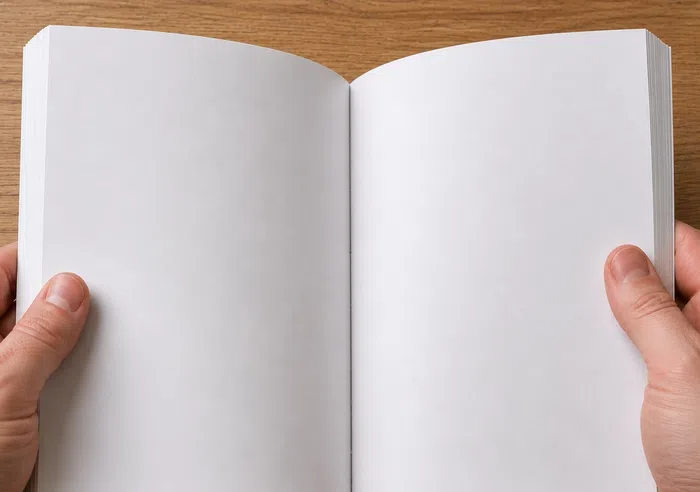
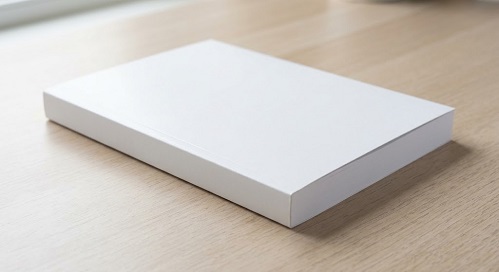
In book manufacturing, a dummy is an unprinted, physical
prototype of your upcoming book. It is assembled, bound, and trimmed using the
exact specifications of your planned print run - matching your paper stock, page
count, trim size, and binding style.
Because the pages contain no ink, a dummy isn't meant for reviewing text, images, or other content. Instead, it showcases the physical construction of the book so you can evaluate...
Spine Thickness and Bulk: Verifying how thick the book will actually be based on your paper's caliper (thickness), which impacts spine text layout and shipping box dimensions.
Weight and Heft: Determining if the paper stock feels appropriate for the genre (e.g., a lightweight stock for a massive textbook versus a heavier stock for a children's book).
Ergonomics and Opening Behavior: Testing whether your chosen binding style opens comfortably for the reader. This is especially important for lengthy books as well as workbooks or activity books that need to written in.
Cover Rigidity: Assessing if your cover stock (such as a 10-point or 12-point cover) provides enough durability and protection for the interior pages.
From Your Support Team:
PDF proofs and loose paper samples are important tools, but neither can match how a bound book functions or feels in your hands. So if you are deciding between different paper weights or finishes, we recommend you order multiple dummies using different stocks. Testing the weight, stiffness, and page-turn in real life takes the guesswork out of your final material choices.
Book Dummy vs. Printed Proof: A Quick Summary of the Differences
Over the years, we have noticed that first-time book buyers often confuse the terminology of a book dummy with a printed proof copy. While both are bound samples, they have different characteristics and serve different purposes:
| Unprinted Book Dummy | Printed Proof Copy | |
|---|---|---|
| Contains Printed Ink? | No (blank pages) | Yes |
| Primary Purpose | Evaluate the feel and physical construction, weight, thickness, and binding | Evaluate the content placement, ink colors, image resolution, margins, and overall layout |
Note on Printed Proofs: While a printed proof gives you a
physical copy of your printed book, keep in mind it is typically produced on a high-end
digital press rather than a commercial offset press. So if your print run meets
the volume threshold required for offset production, be aware that minor color variances
can occasionally occur between a digitally produced proof and an offset
production run, which is why working with experienced press operators is
important.
So...Should You Order a Dummy or Skip It?
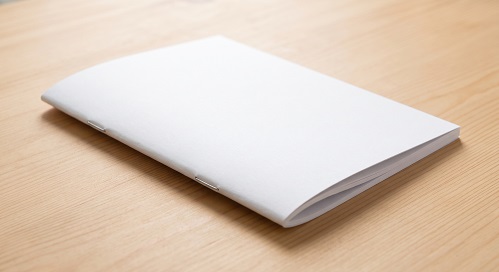
It's good to know a book dummy can be created when you need one, but it isn't something every book project needs.
If you are re-ordering a title with the
exact same specifications as a previous print run, you already know what to
expect.
However, a physical dummy makes sense if...
You are changing the size or format: Moving from a standard book
size to a custom trim size or orientation.
You are experimenting with paper weights: Comparing how a
60# offset paper feels versus a 70# matte coated paper for a book with a high page count.
Binding functionality/durability is a priority: Ensuring a
perfect-bound spine is wide enough for legible spine text or the book's cover
weight is heavy enough to withstand frequent use.
Talk to a Printing Specialist
Choosing the right combination of paper, binding style, and
finishes doesn't have to be a guessing game. If you aren't sure whether your
project calls for a physical dummy (or a printed proof), our team at Color
Vision is here to help you navigate the options.
Call us directly at 800-543-6299 to discuss your book's specifications with a printing specialist, or submit your specifications through our Quote Request form to get started on your project.

Pete is a member of the Color Vision team and has nearly 20 years experience in printing, design, and marketing. He writes about a wide range of print-related topics, including book printing and binding, full-color printing, paper types, and finishing techniques. His articles contain simple, straightforward explanations, helping people to better understand their printing options and make more informed decisions about their projects.
Related Articles
Why is a “Self Cover” Booklet more Economical?
Read This Article
Plastic Comb Books: What does the "Comb" refer to?
Read This Article
The Benefits of PUR Binding
Read This Article

What is the Best Page Count for Saddle Stitch Binding?
Read This Article