
Book Printing: What Is a Dummy?
estimated reading time: 4 minutes
What is a Book Dummy...and When Do You Actually Need One?
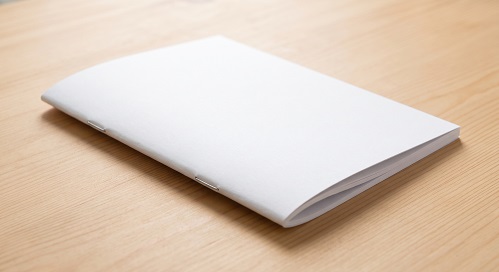
In commercial book manufacturing, a book dummy is an
unprinted prototype assembled with your exact paper stock, page count, trim
size, and binding style. It is used to evaluate the physical construction of
your book before the actual production begins. Color Vision offers book dummies
to help publishers and authors test real-world ergonomics, shipping weight, and
spine thickness before a single drop of ink hits the press.
While digital PDF proofs can verify the artwork layout, they
cannot tell you how a book actually behaves in your hands. A blank dummy
eliminates guesswork by allowing you to evaluate five critical production
factors:
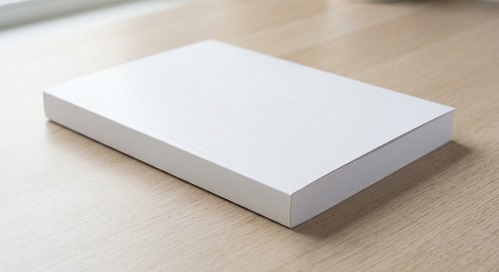
Spine Thickness and Bulk: Verifies the true thickness of your book block. This ensures the spine width on you cover artwork is sized accurately. It can also help you calculate shipping carton dimensions.
Weight and Heft: Confirms whether the overall paper weight feels natural for your genre - such as selecting a lighter 60# text stock to prevent a 400-page manual from becoming too cumbersome, versus choosing a heavier and sturdier 100# text stock for a children's book.
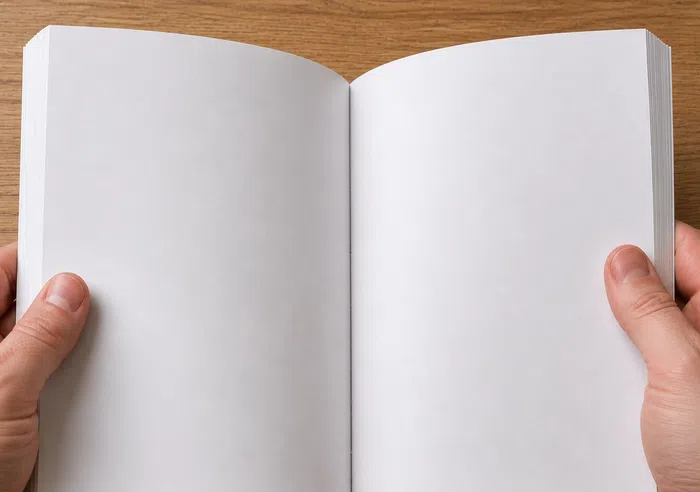
Ergonomics and Opening Behavior: Tests how the book opens and flexes. This is essential for cookbooks, workbooks, journals, or reference manuals that need to stay open easily on a tabletop or desk.
Cover Rigidity: Determines whether your specified cover stock (such as a 10 pt. vs. 12 pt. cover) delivers adequate stiffness and durability to protect the interior pages.
Paper Color, Texture, and Sheen Level: Assesses sheet
opacity, base tone, and surface finish under real-world lighting. This ensures
your chosen paper color (such as bright white, off-white, or cream) and finish
(uncoated, matte, or gloss) will provide comfortable readability without
distracting reflections or excessive show-through.
Insight from our Bindery Team:
Digital proofs and loose paper swatches are important tools for decision making, but neither can demonstrate how a fully bound book functions or feels in your hands. So if you are trying to decide between different paper weights or finishes, consider ordering multiple dummies using different stocks. Comparing the thickness, sheen level, and page-turn dynamics side-by-side removes uncertainty from your material choices.
Book Dummy vs. Printed Proof: Key Differences
Over the years, we have noticed that first-time book buyers sometimes confuse a book dummy with a printed proof copy. While both represent physical samples of your book, they have different characteristics and serve different purposes:
| Unprinted Book Dummy | Printed Proof Copy | |
|---|---|---|
| Contains Ink? | No (blank pages) | Yes (text, images, cover design) |
| Primary Purpose | To evaluate weight, function, spine width, and binding flexibility | To verify image resolution, color accuracy, margins, and content layout |
| Production Method | Assembled with actual paper stocks on bindery equipment | Typically produced on a high-end digital production press |
| Timing of Use | When confirming material selection and dimensions prior to prepress | When performing a visual sign-off before the actual production run |
A Note on Printed Proofs: Because
a physical proof copy is typically printed digitally, slight color variations
can occur if your production run is printed on an offset press. Digital toner
and offset inks lay down differently on paper fibers, which makes working with
an experienced press team essential for maintaining color consistency across
processes.
Should You Request a Dummy or Skip It?
It's nice to know book dummies are available, but not every
book project warrants a dummy. If you are re-ordering an existing title or
producing a straightforward book design on familiar paper stocks, digital PDF
proofs are typically all you need.
A physical book dummy is strongly recommended when:
You are changing the size or format:
You are experimenting with paper weights: Comparing
how a 60# uncoated text stock balances against an 80# matte coated stock
across hundreds of pages.
Spine precision and postal limits are critical: Ensuring a
perfect-bound spine is wide enough for legible spine text or keeping a direct-mail catalog under strict USPS weight thresholds
Talk to a Printing Specialist
Selecting the right specifications for your book project does not have to involve trial and error. If you are planning to print a book and want to determine whether your project benefits from a dummy or a printed proof, our team can help you review your options.
Call us directly at 800-543-6299 to discuss your book's specifications with a printing specialist, or submit your project details through our Quote Request form to get started.

Pete is a member of the Color Vision team and has nearly 20 years experience in printing, design, and marketing. He writes about a wide range of print-related topics, including book printing and binding, full-color printing, paper types, and finishing techniques. His articles contain simple, straightforward explanations, helping people to better understand their printing options and make more informed decisions about their projects.
Related Articles

PUR Bound Books: 7 Types of Books that call for PUR Binding
Read This Article

Perfect Bound Books: Exploring the Perfect Binding Process
Read This Article
Self-Publishing a Book: How to Choose a Printing Company
Read This Article
Custom Book Printing: What is Wire-O Binding?
Read This Article