
How Thick Does a Comic Book Need to Be for a Printed Spine?
estimated reading time: 4 minutes
Why Most Comic Books Don't Have Printing on the Spine
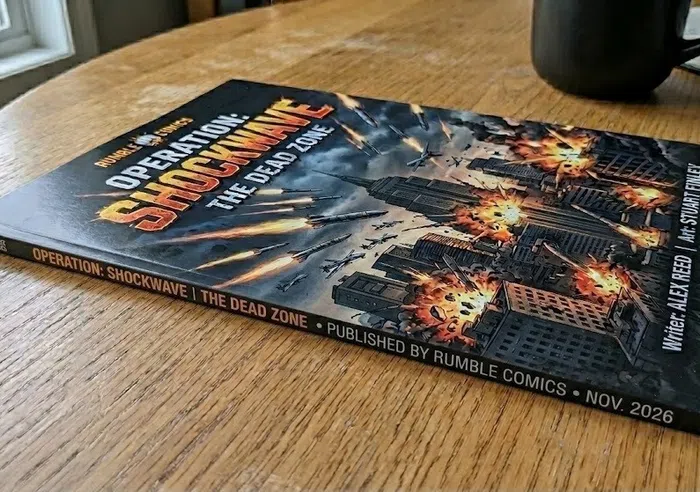
Not every comic book is thick enough to accommodate printing
on the spine. In fact, the vast majority of comic books are produced using the saddle-stitch
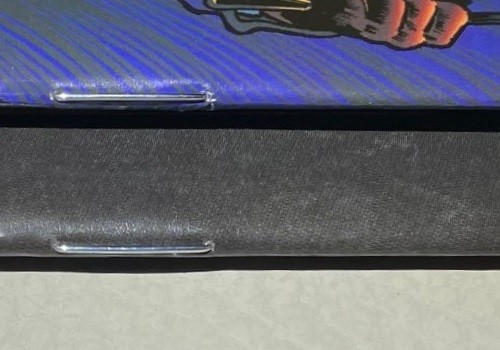
binding method. This binding style uses folded sheets that are gathered
together and secured with wire staples inserted through the fold line.
As a result, the "spine" of a saddle-stitched
comic is essentially just a crease where the pages are folded rather than a
flat, printable surface. Because this area is extremely narrow, there is simply
not enough room to print a title, issue number, or other identifying
information. This is why saddle-stitched comics - even those from major
publishers - typically do not feature titles or other printing on the spine.
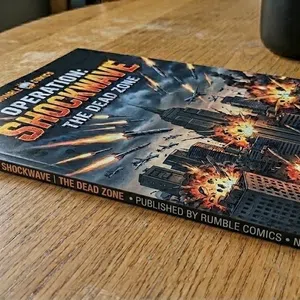
How Perfect Binding Creates a Printable Spine
Unlike saddle stitching, the perfect binding method does not
rely on folded sheets and staples. Instead, the printed pages are gathered together
in a crisp stack (known as the page block) and secured within a wraparound
cover using a strong adhesive. This process creates the square, flat spine needed
to display the comic's title, issue number, creator names, publisher logo, or other identifying details.
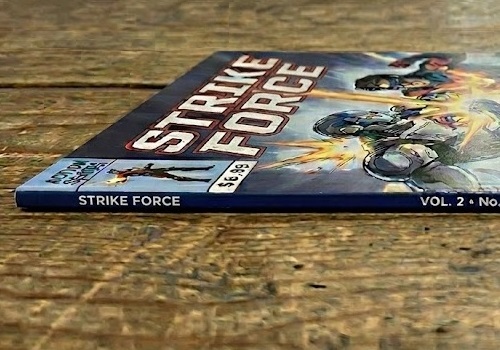
However, it is important to note that simply choosing the perfect
binding method does not automatically guarantee ample room on the spine. The
spine must still be wide enough to accommodate the desired text or artwork.
For example, a thin perfect-bound comic may technically
have a flat spine, but it may not provide sufficient space for legible
printing. The amount of available spine width depends on several factors,
including the number of pages and the thickness of the paper stock.
So What Page Count is Necessary for Printing on the Spine?
Though some printers may state a minimum page count needed for
spine printing, it is more practical to focus on the overall thickness of the
page block rather than the number of pages. This is because comics made with heavier
stocks need fewer pages to reach the minimum threshold for spine printing, while comics made from lighter stocks will require more pages to reach the same threshold. So
focusing on the overall thickness of the page block makes more sense than relying
solely on the page count.
From a construction standpoint, perfect bound books need the page block to
be at least 1/8" thick so the adhesive has enough surface area to provide
a secure bond between the pages and the cover. At this minimum 1/8" thickness, printing
text or graphics on the spine is possible, but realistically, it will be quite a squeeze.
For best results, a minimum page block thickness of approximately
1/4" is recommended. The additional width provides enough room for legible
text and creates a more forgiving production process. With a wider spine,
minor manufacturing tolerances are less noticeable, helping titles, logos, and
other spine elements appear properly centered on the finished book.
Check with your Printer early in the Process
Because paper thicknesses, cover stocks, and production
specifications vary from project to project, it is always advisable to consult with
your printer early in the design process to confirm your particular comic is
suitable for spine printing.
Printers can calculate the exact spine width based on your page count and the type/thickness of paper you prefer for the interior
pages and cover. This information helps to ensure the cover artwork is designed
correctly and that any spine text fits properly.
Should You Choose Perfect Binding Just to Get a Printed Spine?
Not necessarily. If your comic happens to fall into the page
range where perfect binding makes sense, the printed spine becomes an added
benefit.
But the desire for a printed spine shouldn't be the primary
factor in choosing between saddle stitching and perfect binding. Your budget and the overall needs of the
project should outweigh the desire for spine text alone.
Are you Planning to Print a Comic Book with Text on the Spine?
Color Vision has a strong reputation for producing affordable, high-quality comic books in various thicknesses and binding styles.
So if
you're planning a comic book project and hope to include a printed spine, be
sure to get in touch with us. We'll go over your page count and other specifications
to ensure the spine can accommodate the printing you have in mind.
Just give us a call at 800-543-6299 to discuss
your book project. Or, if you've already finalized your specs and are looking
for a price quote, complete our simple Quote Request form and we will
be happy to email a custom quote to you.
As a full-service printing company, we have both digital and
offset presses. This allows us to match your project to the most cost-effective
production method. We also offer a wide variety of finishing options to help
your comic stand out from the crowd.
We hope to hear from you soon and look forward to assisting with your Comic Book project!

Pete is a printing industry writer and content creator employed by Color Vision Printing. With two decades of printing, design, and marketing experience, he writes about a wide range of print-related topics, including book printing and binding, full-color printing, paper types, and finishing techniques. His articles contain simple, straightforward explanations, helping people to better understand their printing options and make more informed decisions about their projects.
Related Articles

How Many Comic Books Should I Print? 25, 100, 250, or 500?
Read This Article
Can You Print Black and White Comic Books?
Read This Article
How Thick Does a Comic Book Need to Be for a Printed Spine?
Read This Article
How Many Pages Are in a Typical Comic Book?
Read This Article