
Printing Paper: Text Weight vs Cover Weight Explained
estimated ready time: 8 minutes
Choose the Right Paper Stock for Your Print Project
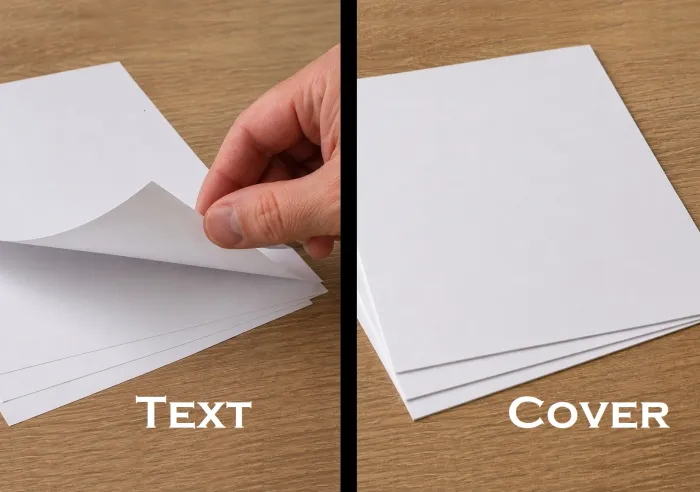
Understanding the difference between Text Weight and Cover Weight is essential when selecting paper for commercial printing projects. Yet, it's one of the most misunderstood aspects of paper selection.
Over the years, we've helped customers select paper stocks
for a wide variety of printing applications. So we know firsthand how paper
selection influences the appearance, feel, and durability of printed pieces.
In this article, we'll explain the differences between text
weight and cover weight, how paper weights are measured, and how to choose the
right stock for your particular project.
Why Paper Weight Matters in Printing
Paper selection affects much more than just the appearance
of your printed materials. The stock you choose can directly impact:
Perceived quality: Paper weight influences the look and feel
of your finished piece and the impression it makes.
Durability: Heavier stocks generally provide greater
stiffness and resistance to everyday handling.
Folding and binding: Paper weight affects how easily a sheet
folds and how well it performs in multi-page bound documents.
Mailing costs: Heavier paper can increase the overall weight
of a mailing, potentially affecting postage costs.
Production costs: Different paper stocks can affect material
costs and certain printing and finishing requirements.
The best paper isn't necessarily the heaviest or most
expensive option. It's the stock that provides the right combination of
appearance, functionality, and cost for your specific project.
What Is Text Weight Paper?
Text Weight refers to a category of paper designed to be
lightweight and flexible. Its lighter construction makes it particularly
suitable for multi-page documents and printed materials that require folding.
Available in both coated and uncoated varieties, text weight
paper is commonly used for the interior pages of books and booklets. It's also
a popular choice for brochures, catalogs, flyers, comics, magazines,
newsletters, and letterhead.
How Is Text Weight Paper Measured?
In the United States, paper is commonly identified by its
basis weight, expressed in pounds (lb or #).
Basis weight is determined by weighing 500 sheets (one ream)
of paper in its designated basic sheet size. Each category of paper has a
different basic sheet size, which is the standard size used for calculating its
weight.
For text weight paper, the basic sheet size is 25" x
38".
So here's how basis weight is calculated for text weight
paper:
- If 500 sheets measuring 25" x 38" weigh 60 pounds, the paper is designated as 60 lb Text.
- If 500 sheets of the same size weigh 100 pounds, the paper is designated as 100 lb Text.
When comparing similar text weight papers, a higher basis
weight generally indicates a heavier sheet. However, basis weight and actual
thickness are not the same thing. Different paper stocks can have different
thicknesses even when their basis weights are identical.
Common Text Weights Used in Commercial Printing
Some of the most common text weights include:
- 50 lb Text - Very light
- 60 lb Text - Light
- 70 lb Text - Light to medium
- 80 lb Text - Medium to heavy
- 100 lb Text - Heavy
These weights offer a range of options depending on the
intended use of the printed material.
Lighter text stocks are often used for the interior pages of
larger catalogs and booklets, where keeping the overall piece lightweight is
important. Heavier text stocks can provide a more substantial feel and may be
preferred for premium brochures or publications.

What Is Cover Weight Paper?
Cover Weight paper is a thicker and stiffer category of
paper designed to provide greater durability and structural strength.
As its name suggests, cover weight is commonly used for the covers
of books and booklets. It's also an excellent choice for premium marketing
pieces and for any printing that needs to withstand frequent handling.
Heavier cover stocks, often referred to as cardstocks, are
commonly used for postcards, business cards, table tents, presentation folders,
and other promotional materials that require additional rigidity.
Just like text weight paper, cover weight paper is available
in both coated and uncoated varieties.
How Is Cover Weight Paper Measured?
Like text weight paper, cover weight is commonly measured
using basis weight, expressed in pounds (lb or #).
However, the basic sheet size used to calculate cover weight
is different from that used for text weight.
For cover paper, the basic sheet size is 20" x
26".
For example:
- If 500 sheets measuring 20" x 26" weigh 80 pounds, the paper is designated as 80 lb Cover.
- If 500 sheets of the same size weigh 100 pounds, the paper is designated as 100 lb Cover.
Because cover paper uses a smaller basic sheet size than
text paper, the pound designations of cover and text weight papers cannot be
compared directly.
In general, higher basis weights within the same paper
category indicate heavier stocks. However, actual thickness can vary depending
on the particular paper.
Understanding Cover Stock Thickness
In addition to basis weight, heavier cover stocks are often
identified by their actual thickness, measured in points (pt).
One point equals 1/1,000 of an inch (0.001").
For example:
- 10pt cardstock measures approximately 0.010" thick.
- 12pt cardstock measures approximately 0.012" thick.
- 14pt cardstock measures approximately 0.014" thick.
- 16pt cardstock measures approximately 0.016" thick.
Unlike basis weight, which measures the weight of a
specified quantity of paper, point measurements describe the actual thickness
of the sheet.
Common Cover Weights Used in Commercial Printing
Some common cover weights and thicknesses include:
- 80 lb Cover - Light cover
- 100 lb Cover - Medium cover
- 10pt - Light cardstock
- 12pt - Medium cardstock
- 14pt - Heavy cardstock
- 16pt - Extra heavy cardstock
The appropriate choice depends on how the finished piece
will be used and how much stiffness and durability it requires.
For instance, a magazine may use a lighter cover stock,
while a business card or presentation folder will benefit from a heavier, more
rigid stock.
Text Weight vs. Cover Weight: What's the Difference?
One of the most common misunderstandings when selecting
paper is assuming that text and cover weights with the same pound designation
are equivalent.
However, they are not.
Consider 80 lb Text and 80 lb Cover - two stocks with the
same lb designation, but 80 lb Cover is considerably thicker and stiffer than
80 lb Text.
Here's why:
- 80 lb Text: The basis weight is calculated using 500 sheets measuring 25" x 38".
- 80 lb Cover: The basis weight is calculated using 500 sheets measuring 20" x 26"
Because the two categories use different basic sheet sizes,
their pound designations represent different weights and physical properties.
The same principle applies when comparing other text and
cover weights. An identical pound designation does not mean the two stocks will
have the same thickness, stiffness, or feel.
The important thing to remember is that basis weight
measures the weight of paper relative to its designated basic sheet size. It
isn't a direct measurement of thickness.
For a deeper dive into how paper density is calculated, see
our related article: Paper Weights Explained: The Meaning of Paper Basis
Weight. Because US basis weights rely on different basic sheet sizes,
comparing paper from different categories isn't always apples-to-apples. To
solve this, the global printing industry uses GSM (Grams per Square Meter) for a
universal, direct comparison regardless of the paper category. Learn more in
our guide: Printing Terminology: What Does GSM Mean in Regard to Paper?
Should You Choose Text Weight or Cover Weight?
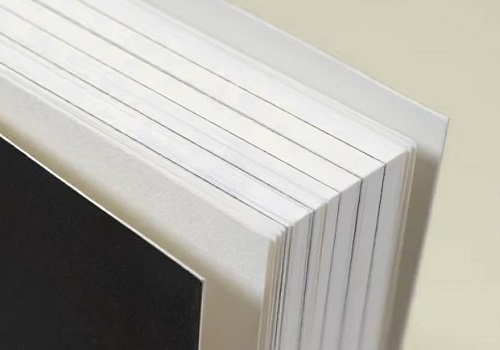
About a month ago, a customer approached us for a quote on a 48-page booklet using 80 lb cover stock throughout. Our sales team explained that using 80 lb cover for the pages would make them too stiff and difficult to turn. Instead, we recommended using 80 lb text stock for the interior pages, paired with an 80 lb cover for the outside. This combination delivered the premium look and feel the customer wanted while maintaining the booklet's functionality and reducing the overall cost.
Here are some general guidelines based on common commercial
printing applications.
Choose Text Weight When:
- You're printing a multi-page document and want to minimize overall bulk.
- You want book pages that turn smoothly and naturally.
- Your project involves folding or mailing.
- You need a lighter, more flexible piece.
- You want to keep material and mailing costs down.
Choose Cover Weight When:
- You need additional stiffness and durability.
- Your printed piece needs to hold its shape.
- You're creating book covers, postcards, or business cards.
- Your project involves a single-sheet marketing piece that needs a more substantial feel.
- You want a heavier stock for a premium presentation.
Of course, these are general guidelines. The best paper
choice depends on the specific requirements of your project, including its
design, intended use, finishing requirements, and budget.
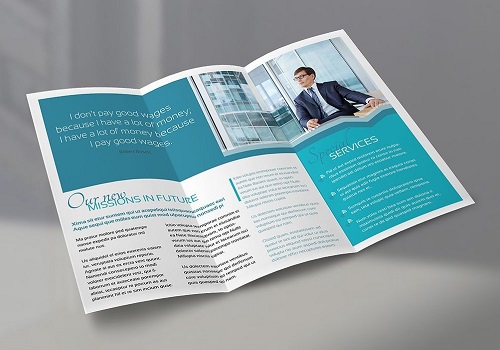
A tri-fold brochure, for example, could be printed on either
text or cover weight paper depending on the desired appearance and how the
piece will be used.
When in doubt, ask us for recommendations before making your
final selection.
Frequently Asked Questions about Text Weight and Cover Weight
Is 80 lb Text the same as 80 lb Cover?
No. Although both have an 80 lb designation, they use
different basic sheet sizes when calculating basis weight. As a result, 80 lb
Cover is considerably thicker and stiffer than 80 lb Text.
Is 100 lb Text heavier than 80 lb Cover?
The two designations cannot be compared directly because
they use different basic sheet sizes. In terms of practical printing
characteristics, 80 lb Cover is generally thicker and stiffer than 100 lb Text.
Is Text weight paper suitable for brochures?
Absolutely. Text weight paper is commonly used for
brochures, particularly when flexibility and ease of folding are important.
However, heavier cover stocks may also be used for folded brochures when additional stiffness
or a more substantial feel is desired.
What paper weight is best for business cards?
Business cards are generally printed on heavier cover weight
cardstock because it provides the stiffness and durability needed for frequent
handling.
Can you use Cover weight paper for book pages?
Yes, but it's generally not the most practical choice for an
entire book. Cover weight paper is typically used for the outside covers, while
lighter text weight paper is used for interior pages to reduce overall bulk and allow for easier page turning.
Color Vision Can Help You Choose the Right Paper!
Selecting the right paper stock can make a significant
difference in the appearance, durability, and overall quality of your printed
materials.
At Color Vision, we've been helping customers with their
commercial printing needs for more than 40 years. Our experience allows us to
help you navigate the many paper options available and select the stock that
works best for your specific project.
Give us a call at 800-543-6299 to discuss your custom
printing needs.
If you already know the specifications of your project, fill
out our simple Quote Request form and we'll be happy to provide you with a custom
quote.
Whatever your printing needs may be, we look forward to assisting you.

Pete is a member of the Color Vision team and has nearly 20 years experience in printing, design, and marketing. He writes about a wide range of print-related topics, including book printing and binding, full-color printing, paper types, and finishing techniques. His articles contain simple, straightforward explanations, helping people to better understand their printing options and make more informed decisions about their projects.
Related Articles
9 Tips for Printing User-Friendly Workbooks and Study Guides
Read This Article

10 Frequently Asked Questions about Bleed and Crop Marks
Read This Article
Installation Manual Printing: 7 Frequently Asked Questions
Read This Article

What Is the Best Paper Weight for Corporate Brochures?
Read This Article