
Which Book Projects Benefit From Being Spiral Bound?
estimated reading time: 7 minutes
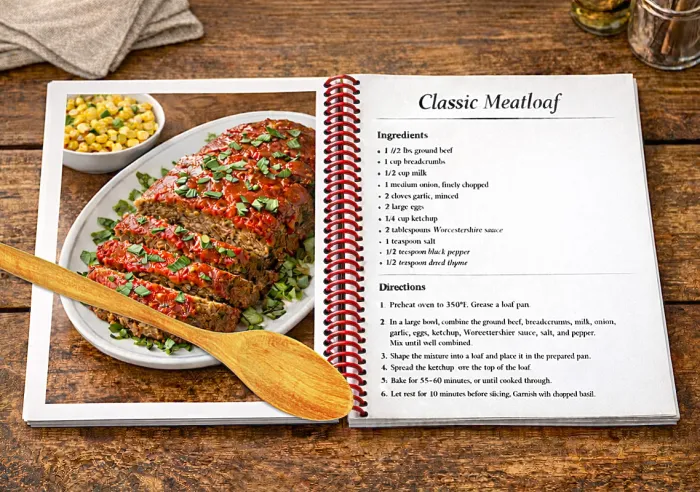
Spiral Binding can be an Ideal Fit for Certain Types of Book Projects
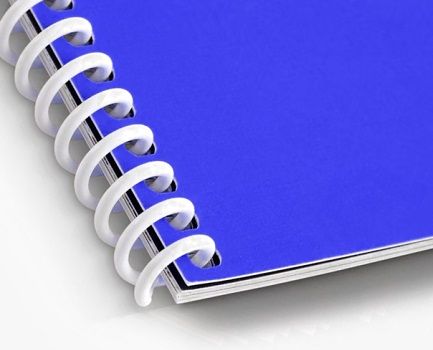
Spiral Binding, also known as Coil Binding, is a reliable
and user-friendly style of bookbinding. This method uses a spring-like coil
that is threaded through a series of small holes punched along the edge of a book's
cover and page sheets. The coil holds the book together as a unit while still
allowing the cover and pages to open and turn freely.
Designed primarily for functionality, Spiral Binding is an
excellent choice for books and booklets that require easy handling, quick referencing,
and/or note-taking. It also works extremely well with thicker paper stocks and
index tabs.
What are the Unique Benefits of the Spiral Binding Method?
Spiral Binding offers several unique benefits that other
binding methods don't provide as effectively. We'll outline these benefits
below and then explore the types of book projects that benefit the most from
using this binding method.
a. Spiral Binding Offers True Lay-Flat Performance
Unlike some other binding styles, there is no resistance or
tension within the spine of a spiral bound book. This allows the cover and pages
to rotate freely and independently around the binding coil. Once a spiral bound
book is opened to a certain page, the pages will not spring shut. The pages will stay put without needing to be held open. This allows an open spiral bound book
to lie perfectly flat on a desk or table for hands-free referencing. Also, the content
of each page remains fully visible from edge to edge.
b. Pages Rotate a Full 360 Degrees
Because the pages are able to rotate a full 360 degrees
around the spine, a spiral bound book can fold completely back on itself so that
only one page is visible at a time. This results in a very compact footprint
that takes up half the table space of a regular open book. Folding the book
back also creates a flat, stable surface for any pages that need to be written
on. Plus, being able to easily flip the pages back and forth helps reduce
stress on them, extending the useful life of the book. This is particularly
beneficial for books that will see heavy use.
c. Spine is Durable and Waterproof
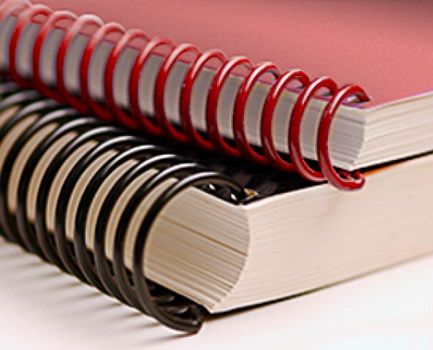
The plastic coils used to create spiral bound books are made
of polyvinyl chloride (PVC), a widely used synthetic polymer. As such, the
coils are resistant to bending or cracking, thus allowing spiral bound books to
stay functional for years, even if used frequently or handled roughly. Also, because
the plastic binding coils are waterproof and do not absorb moisture, they will
not swell, rust, or degrade when subject to humidity, spills, or other damp
conditions. When combining a plastic binding coil with synthetic paper or a sealed-edge
laminate, the entire book can be made waterproof.
d. Covers and Pages Stay Securely Bound
Spiral binding uses a helical coil to secure the covers and
pages together. This coil is twisted through a series of evenly spaced holes
along the binding edge of every page and both covers. The continuous, one-piece
construction of the coil interlinks all the sheets together, making it
impossible for any to loosen or fall out. Also, because the coil passes through
each hole, stress from page turning is spread across the entire spine rather
than concentrated at one point. To keep the coil from accidentally unwinding,
each end is crimped to keep it in place.
e. Spine is Smooth and Flexible
The plastic coils used for spiral binding are completely
smooth, making the bound books comfortable to handle. There are no sharp edges
to scratch skin, snag clothing, or damage surfaces, making spiral binding a
safe and user-friendly method for creating books and booklets. The smooth,
low-friction surface of the binding coil also allows for effortless page
turning. In addition, the plastic binding coils are very flexible. If bent or stretched,
the coil returns to its original shape. Plus, it does not become permanently
distorted if folded back or compressed into a backpack or bag for transport.
Which Types of Book Projects Benefit the Most from Being
Spiral Bound?
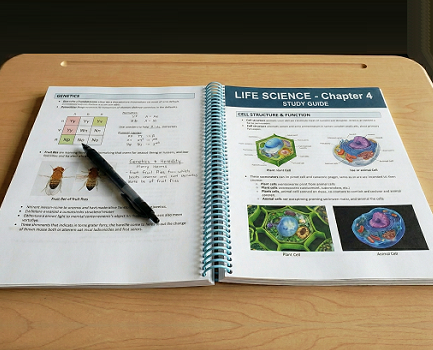
1. Workbooks, Training Guides, and Study Materials
Workbooks, training guides, test prep, and other educational
materials are among the biggest beneficiaries of spiral binding. These books
often require users to write directly on the pages and/or refer to them while
multitasking.
Reasons to use Spiral Binding for Workbooks and Training
Guides:
- Books stay open on their own for hands-free referencing
- Quick page turning during fast paced activities
- Long-term durability for repeated use
- Appearance is clean and practical
- Users can write on the pages without fighting against the spine
- Books can fold backward, taking up less room on the work surface
- Ease of use improves engagement and learning experience
2. Cookbooks
Spiral binding is the perfect choice for cookbooks and
recipe collections, whether the content is intended for use by home cooks or
professional culinarians.
Reasons to use Spiral Binding for Cookbooks:
- Will stay open without the need for clips or weights
- Can fold back upon itself to show only a single page
- Allows for quick flipping between sections and recipes
- Lies perfectly flat on a counter or work surface
- Plastic coils resist water and spills
3. Planners, Journals, and Notebooks
Frequently used items such as planners, journals, and
notebooks benefit from the versatility and practicality of spiral binding. Books
can be folded backward to conserve desk space or they can be held in one hand
while writing or sketching with the other.
Reasons to use spiral binding for Planners, Journals, and
Notebooks:
- Smooth 360-degree page rotation
- Lay-flat capability keeps pages open while working
- Durable binding withstands daily use and constant page turning
- Provides an unobstructed writing surface
- Can fold back upon itself, becoming more compact and easy to hold
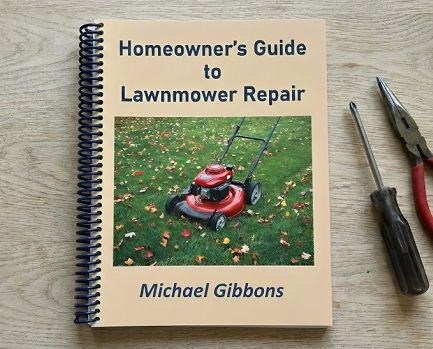
4. Instruction Manuals, Repair Guides, and Reference Books
Many types of manuals and books are used in environments
where convenience and hands-free use is important. Equipment operating instructions,
medical reference books, troubleshooting/repair guides, and technical manuals
are examples of bound documents that often need to stay open while users perform
tasks with their hands.
Reasons to use Spiral Binding for Manuals and Reference
Books:
- Hands-free, books stay open while performing other tasks
- Durable binding endures high-frequency use
- Accommodates thicker stocks for section dividers and index tabs
- Smooth coils allow for quick and effortless page flipping
- Books can fold back upon themselves, taking up less room
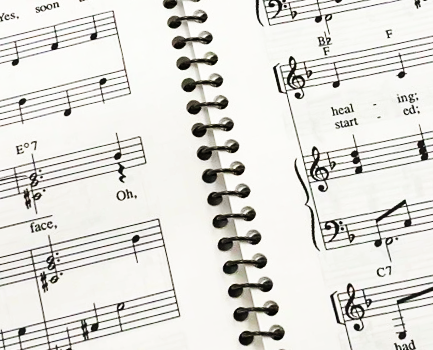
5. Music Books and Songbooks
Whether used for personal practice or a professional
performance, spiral bound music books remain open and won't snap closed unexpectedly.
Reasons to use spiral binding for Music Books:
- Books stay flat against the music stand or book rest
- Pages remain open without needing clips or manual intervention
- The entire page is visible, no content gets lost in the gutter
- Allows performers to turn pages quickly and discreetly
- Durable construction travels well to and from venues
6. Activity Books for Children and Adults
Activity books - such as coloring books, puzzle books, and
craft instruction guides - are subject to frequent handling and page flipping. Spiral
binding makes books easier to use for both kids and adults.
Reasons to use Spiral Binding for Activity Books:
- Pages stay flat for working puzzles or coloring
- Durable coils stand up to frequent handling
- Easy page flipping for interactive activities
- Coils are smooth, no sharp edges to scratch or snag
7. Field Guides and Outdoor Manuals
Because spiral binding is durable and weather-resistant, it
is an ideal binding choice for books used outdoors or in other rugged
environments.
Reasons to use Spiral Binding for books intended for Outdoor
use:
- Robust binding can withstand tough conditions
- Compatible with waterproof paper options
- Easy to handle and reference on the go
- Functions well with thicker, more durable stocks
- Offers a good binding choice for pocket-sized books
The Key Takeaway
Spiral binding is one of the most practical and
user-friendly binding methods available. If your book project needs to provide
hands-free reading, lay perfectly flat, support handwriting, fold back upon
itself to save space, withstand heavy use, and/or accommodate thicker paper
stocks and index tabs, then spiral binding is likely the best fit.
Need help with a Spiral Bound Book Project?
Spiral Binding is a versatile and reliable binding method
that offers numerous advantages. So if you have a need for spiral binding
services, our team is here to help!
Simply use our Quote Request form to send us your project's specifications
and we will be happy to email a custom quote to you. Or, if you prefer to
discuss your project by phone, give us call at 800-543-6299.
Color Vision specializes in custom book printing, so we're
always available to answer your questions and provide quotes for your projects.
We look forward to assisting with your printing and binding needs!

Pete is a printing industry writer and content creator employed by Color Vision Printing. With two decades of printing, design, and marketing experience, he writes about a wide range of print-related topics, including book printing and binding, full-color printing, paper types, and finishing techniques. His articles contain simple, straightforward explanations, helping people to better understand their printing options and make more informed decisions about their projects.
Related Articles
Book Printing: What Is a Dummy?
Read This Article
Book Printing: What Is a Book Block?
Read This Article
9 Tips for Printing User-Friendly Workbooks and Study Guides
Read This Article
Self-Cover vs. Plus Cover: Which Book Cover Should I Choose?
Read This Article