
Which Book Projects Benefit From Being Spiral Bound?
estimated reading time: 4 minutes
Which Book Projects Benefit Most from Spiral Binding?
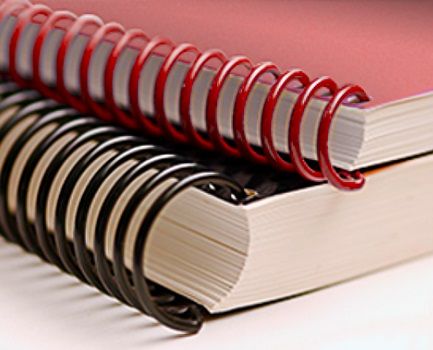
Spiral Binding (also called Coil Binding) threads a
continuous, durable plastic coil through evenly spaced holes punched along the binding
edge of a book. Because the pages rotate independently around the coil with
zero spine tension, it remains the most practical and cost-effective solution
for books that need to lie flat and allow hands-free use.
Key Advantages of Spiral Binding
Pages Lie Perfectly Flat and Can Rotate 360°: Pages stay
completely flat on desks or other work surfaces without needing to be held in
place. Books can fold back on themselves (cover to cover), minimizing their
footprint on cramped work surfaces.
Crush-Proof and Weather-Resistant: Unlike twin-loop wire-o
binding, PVC plastic coils flex under pressure and return to their original
shape. They will not rust or swell when exposed to moisture.
Holds Pages and Covers Securely: The continuous coil
interlinks the pages and covers. With both ends mechanically crimped, pages
cannot fall out.
Works Well with Mixed Stocks and Tabs: Spiral binding coils
can accommodate mixed paper stocks, cardstock covers, laminated sheets, and tabbed
dividers without straining the spine.
Insight from our Prepress Team
Being a "punch and bind" style of binding, the spiral coil actually penetrates the pages. So make sure your artwork layout has a minimum gutter margin of 0.500" (1/2"). This will prevent the binding holes, and the coil itself, from interfering with any text or imagery along the binding edge.
Also, if your book contains any crossover images, be aware that when the book is open it will have a physical gap between the left side pages and the right side pages.
7 Book Projects Well Suited for Spiral Binding:
1. Workbooks, Training Manuals, and Study Guides
Workbooks, training guides, test prep, and other educational
materials are a perfect fit for spiral binding. These books often require users
to write directly on the pages and/or refer to them while multitasking. Spiral
bound books can fold flat, taking up less room on a desk or table while
providing an unobstructed writing surface.
2. Cookbooks and Recipe Collections
Kitchens and food prep areas can get messy and cluttered. A spiral-bound cookbook stays open to the selected
recipe while keeping the hands free. It can also fold back upon itself to save
counter space. Plus, books bound with plastic binding coils - especially when
paired with laminated or synthetic paper stocks - resist stains from spills and
grease.
3. Daily Planners, Agendas, and Journals
Planners, agendas, and journals must be able to endure frequent
handling. Spiral bound books can be crammed into a drawer or backpack without distorting
the plastic coil. In addition, the lay-flat format simplifies scheduling,
list-making, and other handwritten entries.
4. Technical, Medical, and Equipment Repair Manuals
Technicians and medical personnel need critical reference
steps while their hands are often occupied with tools or equipment. Spiral
binding guarantees the manual remains open to the exact text or diagram without
needing to be held in place.
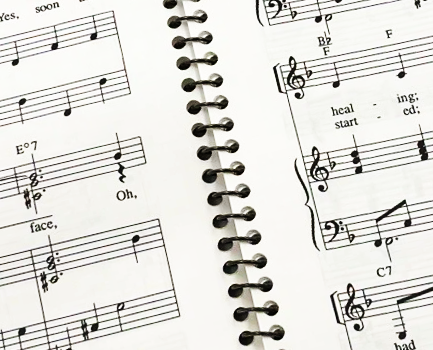
5. Sheet Music and Song Books
Performers cannot afford to have pages springing closed during
a performance or practice session. Spiral-bound books rest flat against music
stands, eliminate gutter-shadow on the pages, and allow for fast and near-silent
page turning.
6. Activity, Coloring, and Puzzle Books
Spiral-bound books make page flipping easy for interactive
activities. Furthermore, being able to effortlessly fold the book in half
allows for comfortable use on one's lap or on the go.
7. Field Guides and Outdoor Manuals
When made with synthetic paper or a sealed-edge laminate,
spiral-bound field guides can be used in rainy, snowy, or muddy conditions. The
plastic spine is completely waterproof and can stand up to rough handling.
Spiral Binding Does Have a Few Limitations
While spiral binding is an ideal fit for certain types of
books, there are a few design and structural limits to keep in mind:
The Spine is Not Printable: Because the spine of the book is
a plastic coil and not a flat surface, it cannot be printed with the book's
title, author, or other information. This is an important factor to consider if
your book needs to be easily identifiable when on a shelf, such as in a retail
bookstore.
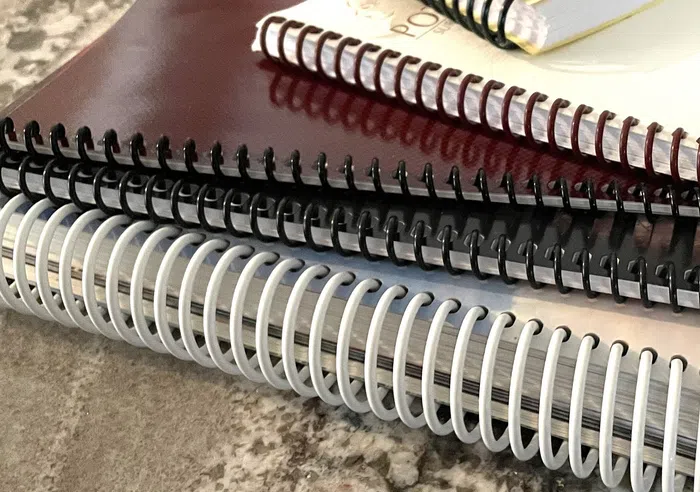
Spiral Bound Books Do Not Stack Particularly Well: Due to the physical dimensions of the binding
coil, spiral bound books will not stack as flush or as flat as perfect-bound
books. They will naturally take up a bit more vertical space and the stacks can
lean slightly.
Large Books Can Be Cumbersome: Exceptionally thick books require large-diameter
coils, which can make the book bulky and cumbersome to handle. If your page
count is pushing the limits of a standard size book, consider splitting the book into multiple volumes to ensure it remains user-friendly and
easy to handle.
Plan Your Spiral Bound Project with Color Vision
Whatever type of spiral bound book project you are working
on, Color Vision can tailor the printing and binding to your exact page count, trim
size, and other specifications.
Get an Estimate: Send us your project specifications via our
Quote Request form and we will be happy to email a custom quote to you.
Speak with a Print Specialist: Call us directly at 800-543-6299 to discuss paper stocks, margin allowances, coil sizing options, or anything else you need help with.

Pete is a member of the Color Vision team and has nearly 20 years experience in printing, design, and marketing. He writes about a wide range of print-related topics, including book printing and binding, full-color printing, paper types, and finishing techniques. His articles contain simple, straightforward explanations, helping people to better understand their printing options and make more informed decisions about their projects.
Related Articles
Book Printing: What Is a Dummy?
Read This Article
Book Printing: What Is a Book Block?
Read This Article
9 Tips for Printing User-Friendly Workbooks and Study Guides
Read This Article

Self-Cover vs. Plus Cover: Which Book Cover Should I Choose?
Read This Article