
Commercial Book Printing: What are my Paper Options?
estimated reading time: 5 minutes
What Paper should I use to Print my Books?
Choosing the right paper is one of the most important decisions
you'll make when printing a book. The paper you select doesn't just affect the look and feel of your book - it also dictates the readability,
durability, and overall reader experience.
Commercial printers offer a wide variety of paper stocks for
the pages and covers of books, each intended for a specific purpose. Whether
you're self-publishing a novel, printing a full-color product catalog, or
producing a durable training manual, understanding your paper options is key to
a successful print run.
Here at Color Vision, we've spent the past 40+ years helping
authors and businesses navigate these exact choices. Below, we've broken down
the most common paper options for books, what each has to offer, and how to
choose the right one for your project.
Coated Paper vs. Uncoated Paper
In commercial book printing, the first major decision point is
choosing between coated and uncoated paper. The distinction between these two
is whether or not a surface coating was applied at the paper mill. This factor
heavily influences the paper's sheen, texture, and how it absorbs ink.
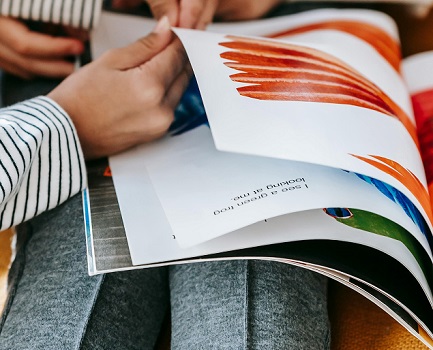
Coated Paper: Smooth and Less Porous
Coated paper has a thin surface layer - usually made of
clay, polymers, and pigments - applied during its manufacturing process. This
coating seals the natural paper fibers, creating a smoother, less porous
surface that restricts how much ink absorbs into the sheet.
Because the ink sits on top of the coating rather than
soaking in, printed content appears clean and uniform.
Finishes: Coatings range from Gloss (highly reflective,
offering maximum color vibrancy, and image sharpness) to Matte (softer visuals,
subdued colors, and less glare).
C1S vs. C2S: Paper coated on one side is designated as C1S
(Coated One Side), while C2S means it is coated on both sides.
Best Used For: Books containing color-rich images or
design-heavy layouts. Think product catalogs, magazines, cookbooks, children's
picture books, and illustrated manuals.
Insight from our Bindery Team:
We always recommend coated stocks for book covers. In addition to providing a sleek, professional appearance, coated paper offers resistance to scuffs, dirt, and moisture that a book will naturally encounter.
Uncoated Paper: Natural Feel without Glare
Uncoated paper bypasses the surface coating at the mill. This
leaves the natural paper fibers exposed, resulting in a rougher, more porous
texture.
Because there is no coating to act as a barrier, ink absorbs
deeply into the paper fibers, giving the printed content a softer, more subdued
appearance. Also, uncoated paper produces zero glare, which drastically
improves readability in all lighting conditions. Furthermore, the slight
texture provides a natural "grip" that makes page-turning easier.
Best Used For: Text-heavy books where readability is the top
priority, such as novels, biographies, textbooks, reference guides, and poetry
collections.
Writable Surfaces: Because its absorbent surface takes pen
and pencil marks cleanly without smudging, uncoated paper is the undisputed
champion for workbooks, journals, planners, and activity books.
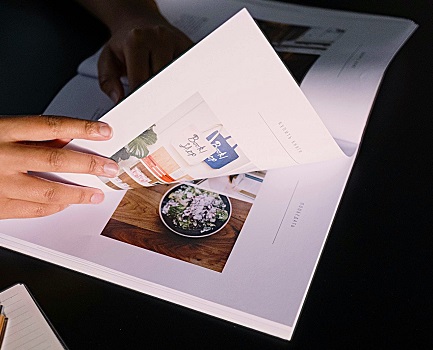
Understanding Paper Weights and Thickness
Once you decide on the surface finish, you need to select the
paper's thickness. In the US, the thickness of a paper stock is referred to as
its "weight."
Text weight (used for interior pages) is specified in pounds
(lb or #). Cover weight (used for book covers) is thicker and sturdier, sometimes specified in pounds but also as points (pt), where one point equals one-thousandth of an inch
(0.001").
Common Options for Interior Pages (Text Weight)
50 lb text: Lightweight and highly economical. This is our
go-to recommendation for books with massive page counts (to keep the spine
thickness manageable) or for books that will see limited use.
60 lb - 70 lb text: The industry standard. This weight hits
the sweet spot between durability and flexibility and works perfectly for the
vast majority of book projects.
80 lb - 100 lb text: Premium, thick paper. We recommend this
when increased opacity is required (so heavy ink doesn't show through the other
side of the page) or when you want the book to feel substantial and high-end.
Common Options for Book Covers (Cover Weight)
80 lb - 100 lb cover: The lighter end of the cover weights.
It is durable but flexible, making it the most common choice for
saddle-stitched (stapled) booklets.
10 pt - 12 pt cardstock: The industry standard for perfect
bound (glued spine) paperback books. It provides good rigidity and a
professional feel.
14 pt - 16 pt cardstock: A premium, ultra-rigid stock. This
is ideal for high-end perfect bound books, as well as spiral coil or wire-o
bound manuals that need to withstand heavy daily use.
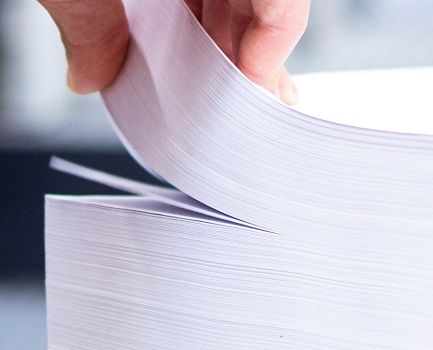
Selecting the Right Paper Color
While paper comes in every color of the rainbow, only a
select few are suitable for professional book printing. Why? Because
readability relies entirely on the contrast between the ink and the page. Dark
or novelty paper colors can distort both colored and black inks, leading to a
poor reading experience.
For the interior pages of a book, your best choices fall
into three categories:
White (or Bright White): The most popular and cost-effective
choice. Available in both coated and uncoated stocks, White paper offers the
highest possible contrast for text and ensures the most accurate color
reproduction for photos and illustrations.
Off-White (Natural/Warm White): Sitting comfortably between
White and Cream, Off-White has a softer, ivory tone. It reduces ink contrast
just enough to prevent eye strain during long reading sessions. It is a
favorite for memoirs and literary nonfiction.
Cream: Featuring subtle yellow or beige undertones, Cream is
the warmest shade of the three paper colors mentioned here. It significantly
reduces eye fatigue and lends a classic, traditional aesthetic to the printed
page. Since it is intended for black text, it is primarily available as an
uncoated stock.
A Printer's Perspective:
If you are printing fiction or narrative non-fiction - including novels, short story collections, memoirs, biographies or poetry - our recommendation is to use Off-White or Cream uncoated paper. Readers naturally associate these paper tones with comfortable, immersive reading.
Let's Find the Perfect Paper for Your Book
If you take one thing away from this article, let it be
this: There is no single "best" paper for book printing - there is
only the best paper for your specific project.
Whether you are printing 200 employee training manuals or
2,000 copies of your debut novel, the paper you choose should actively support
your book's intended use.
With over 40 years of commercial book printing experience,
Color Vision has the technical expertise to ensure your project comes off the
press looking exactly how you envisioned it. We have built our reputation on
delivering high-quality, professional book printing at genuinely affordable
rates.
Ready to get started?
Need guidance? Call us at 800-543-6299 to speak directly
with a print specialist about your paper options.
Know your specs? Fill out our Quote Request form, and we
will send a custom quote right to your inbox.
We look forward to partnering with you on your next print project.

Pete is a member of the Color Vision team and has nearly 20 years experience in printing, design, and marketing. He writes about a wide range of print-related topics, including book printing and binding, full-color printing, paper types, and finishing techniques. His articles contain simple, straightforward explanations, helping people to better understand their printing options and make more informed decisions about their projects.
Related Articles
Book Printing: What Is a Dummy?
Read This Article
Book Printing: What Is a Book Block?
Read This Article
9 Tips for Printing User-Friendly Workbooks and Study Guides
Read This Article
Self-Cover vs. Plus Cover: Which Book Cover Should I Choose?
Read This Article