
What Is the Best Binding Method for Training Manuals?

estimated reading time: 8 minutes
Choosing the Right Binding is an Important Decision
Training Manuals remain an invaluable resource for businesses, schools, manufacturers, healthcare organizations, and countless other industries. They provide employees, students, and trainees with clear guidance on tasks, responsibilities, procedures, and established workflows.
Unlike digital documents that can be difficult to access
in certain environments, printed manuals offer a convenient reference that can
be used anywhere without the need for a computer, tablet, or internet
connection.
If you are planning to produce printed training manuals for your organization, choosing the right binding method is an important decision. The binding style can significantly impact the manual's usability, durability, professional appearance, and overall printing cost.
Some binding methods are
ideal for manuals that need to lie flat during use, while others offer a more
polished presentation or greater economy. Understanding the unique benefits each
binding option provides will help ensure your training manuals are both
practical and cost-effective.
Choosing the Best Binding Method Depends on Several Factors
The best binding method for a training manual depends on a
variety of factors, such as…
- Will the manual see frequent use or just occasional use
- Does it need to lie perfectly flat when in the open position
- What level of professionalism do you want to project
- What is the expected lifespan of the manual
- How many pages are in the manual
- Does it need to have a printed spine
- What is the available budget
Selecting the appropriate binding method helps ensure your
training manuals are well suited to their intended use. Below are the most
popular types of binding for printed training manuals.
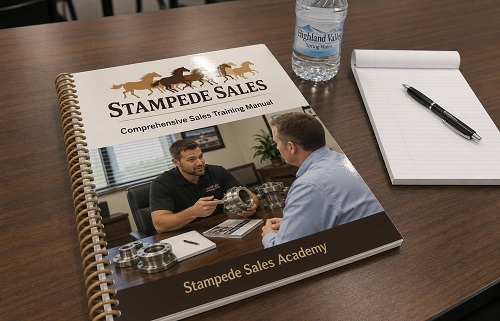
Spiral Bound Training Manuals
Spiral Binding is one of the most frequently chosen options
for training manuals. Also known as coil binding, spiral binding uses a
spring-like coil that is threaded through a series of holes punched along one
edge of the manual's pages and covers. After the coil is fully inserted, it is
crimped on both ends to hold it in place.
The front and back covers of a spiral bound manual are made
as two separate sheets. This is different than the covers of saddle stitched
and perfect bound manuals where the front and back covers are printed on a
single sheet that wraps over the interior pages.
The vast majority of binding coils used for custom-printed books and manuals are made of flexible PVC plastic. These PVC coils are
waterproof, plus they resist abrasion and distortion.
In addition, the coils are available in a variety of
different colors to complement virtually any project. The coils are also
available in a wide range of diameters to accommodate most page counts.
Also, because the pages and cover are able to rotate so
freely around the coil, spiral bound manuals can open to a full 360 degrees.
This feature allows the manual to lie completely flat on a desk or table
without needing to be held open. This not only allows the manual to take up
minimal space, it leaves both hands free to perform other tasks while
referencing the manual's content.
Advantages of Spiral Binding:
- Can fold back 360 degrees and pages lie completely flat when open
- Stands up to frequent use and rough handling
- Spines come in a variety of sizes and colors
- Pages rotate freely and work well with index tabs
- Easy for users to reference while taking notes or performing other tasks
For organizations that prioritize functionality and ease of
use, spiral binding is often the best binding method for training manuals.
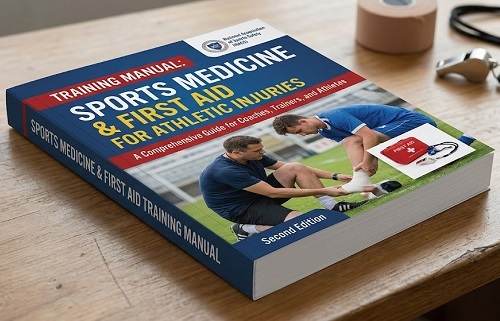
Perfect Bound Training Manuals
Perfect Binding is another widely used method for
creating training manuals. Perfect Binding uses a hot-melt adhesive to secure a
block of printed pages within a wraparound cover. Once the adhesive sets, the
three open sides of the book are trimmed to create perfectly straight edges.
Perfect binding is an ideal fit for manuals that have
moderate to high page counts. However, it is not well suited for manuals with
very low page counts because the binding adhesive needs at least 1/8" of
surface area to bond effectively. If the page count is too low, the spine won't
be wide enough to provide enough surface area for the adhesive to secure the
page block to the cover.
The perfect binding method not only yields clean and
straight edges, it also produces a flat, printable spine.
Advantages of Perfect Binding:
- Has a clean and professional "bookstore quality" appearance
- Perfect for higher page counts, can accommodate hundreds of pages
- Modern adhesives - particularly PUR glue - provide long-lasting durability
- Printable spine can display title and other information
- Uniform thickness allows manuals to stack neatly on a desk, table, or shelf
Perfect binding works especially well for thicker manuals. Also,
the clean design helps create a strong first impression while conveying a sense
of professionalism and high quality.
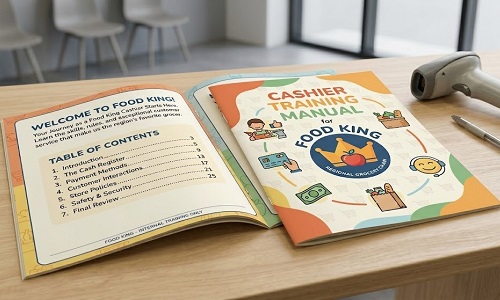
Saddle-Stitched Training Manuals
Saddle Stitching is an excellent choice for thinner training
manuals, as it is best suited for lower page counts. It is also one of the most
economical binding methods, making it a practical option for cost-sensitive projects.
Saddle Stitched manuals are created from printed sheets of
paper that have been folded in half. These folded sheets are nested together
and then wire staples are driven through the collective fold line to form the
booklet's spine.
The staples penetrate through the manual's cover and all of
the interior sheets. The staples are cinched closed in the centerfold of the manual.
Two staples are most commonly used and each folded sheet creates four pages of
the manual.
The outer cover is also made from a folded sheet. The cover
is usually made from paper that is thicker than the paper used for the interior
pages. That said, some saddle-stitched manuals use the exact same paper for the
cover and pages. This is referred to as the "self cover" option.
Advantages of Saddle Stitch Binding:
- Offers a simple yet professional look
- Perfect for shorter manuals with lower page counts
- Pages open fully, no content gets lost in the gutter
- Readily available, ideal for short-run projects
- One of the most affordable binding options
Saddle stitching is an ideal binding method for shorter
training manuals because it is designed for lower page counts. It also offers
one of the most affordable ways to produce professional-looking manuals.
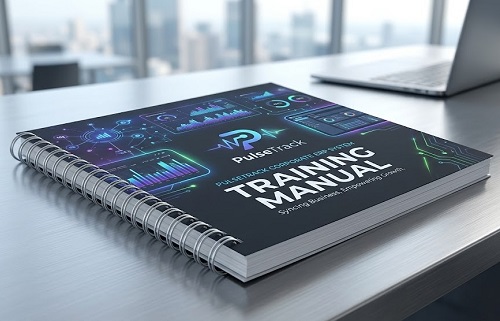
Wire-O Bound Training Manuals
Wire-O Binding functions similarly to spiral binding,
but instead of a continuous plastic coil the wire-o method uses a pre-formed
spine element made from metal wire.
The metal wire spine is shaped to appear as decorative pairs
of wire loops once it is installed. This is why the wire-o method is sometimes
known as twin-loop binding or double-loop binding.
Available in a variety of colors and metallic finishes, wire-o
binding adds a sense of class and sophistication to bound documents. Because of
its professional appearance, it is frequently selected for training manuals
intended to make a strong impression, such as corporate training materials and
executive education programs.
Much like a spiral bound manual, a wire-o manual will lie
perfectly flat when opened...without needing the hands to continually hold it
open. Also like a spiral bound manual, a wire-o manual can open a full 360
degrees and fold back upon itself (cover to cover). This feature not only
makes the book more compact to handle, it also enables the manual to take up
minimal room while being referencing on a desk or tabletop.
Advantages of Wire-O Binding:
- More refined and stylish than plastic binding coils
- Pages open 360 degrees, manuals can fold back upon themselves
- Adds a premium look and feel to training materials
- Offers a variety of spine sizes and colors to complement any project
- Pages lie flat when open and work well with index tabs
Wire-o binding offers many of the same benefits as spiral
binding but it is constructed of metal wire instead of PVC plastic. As such, it
yields a more polished and higher-end appearance.
Ringed Binder Training Manuals
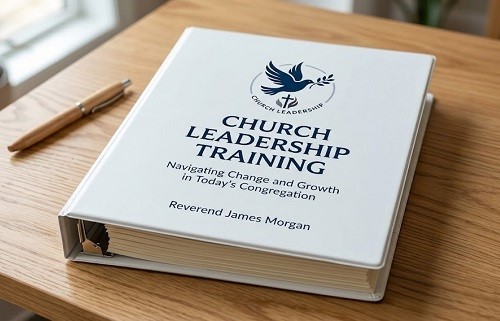
The primary advantage of using Ringed Binders for training
manuals is that pages can be added or removed quickly and easily just by
opening and closing the metal rings. This feature makes ring binders a good fit
for training manuals that need to have the content changed or updated periodically.
Another benefit offered by a ring binder is its protective
cover, which is rigid and slightly larger than the documents stored inside.
There are a couple ways to create custom-printed binders. One
way is to have the printing applied directly to the cover of the binder. Another
way to is to print the artwork for the cover and spine on light cardstock and then
slip these pieces into a clear vinyl overlay attached to the binder.
Binders are available in a variety of sizes and ring
capacities. Of course, training binders can be ordered pre-assembled, with all
the printed pages, index tabs, and other contents inserted into the rings of
the binder.
Advantages of a Ringed Binder:
- Allows content to be easily updated without reprinting the entire manual
- Available in a variety of ring sizes to accommodate manuals of different thicknesses
- Lays relatively flat when open, easy to reference while working or taking notes
- Can be made with pockets on the inside cover for storing supplemental materials
- Supports standard text pages, laminated sheets, oversized foldouts, and tabbed dividers
The biggest advantage of a ring binder isn't necessarily appearance
- it's flexibility. If the manual will require regular updates, a binder often
becomes the most practical choice because individual pages can be swapped out
without reprinting the whole manual. That's a significant cost and time savings
for organizations whose training materials evolve frequently.
Are you looking to have some Training Manuals printed?
For more than four decades, Color Vision Printing has
produced high-quality training manuals, employee handbooks, instructional
guides, and other custom publications for organizations across a wide range of
industries.
So whether you've already selected a binding method or would
like help deciding which option best fits your project, our experienced team is
here to help. We offer a variety of binding methods, along with a wide selection
of finishing options to enhance the durability, appearance, and overall quality
of your printed manuals.
If you already know your project's specifications, simply
complete our Quote Request form and we'll send you a custom quote by email. Or,
if you prefer to discuss your project by phone, give us a call at 800-543-6299.
We'll be happy to answer your questions and help you determine the best
printing and binding solution for your training manual project.
As always, we look forward to assisting with your custom printing and binding needs!

Pete is a printing industry writer and content creator employed by Color Vision Printing. With two decades of printing, design, and marketing experience, he writes about a wide range of print-related topics, including book printing and binding, full-color printing, paper types, and finishing techniques. His articles contain simple, straightforward explanations, helping people to better understand their printing options and make more informed decisions about their projects.
Related Articles
What does Collate mean in Printing?
Read This Article
Printing Terminology: Simplex vs Duplex Printing
Read This Article
Printing Terminology: What does Preflighting mean?
Read This Article
Offset Printing: How do PMS Colors differ from the CMYK Printing Process?
Read This Article