
Cheapest Book Sizes to Print (Save on Printing Costs)
estimated reading time: 5 minutes
Choosing the Right Book Size to Lower Printing Costs
Are you planning a book project and looking to save money on
the printing? Instead of reducing your page count or using lower-quality paper,
start with your finished dimensions. By choosing a "press-friendly"
trim size for your book, you can maximize the number of pages that will fit on
a master press sheet, reducing paper waste and press time. Read on to see which
sizes give you the most bang for your buck.
As commercial book printers, we constantly review quote
requests from authors, publishers, and businesses. Often, they are looking for
ways to stretch their budget. What many don't realize is that one of the
smartest ways to save money on book printing has nothing to do with paper
quality or ink.
It actually starts with something much simpler: your book's
finished size.
In the printing industry, we call this the "trim
size." It might seem like a minor detail, but choosing a dimension that is
just a half-inch too large can significantly inflate your quote. Below is a
behind-the-scenes look at the reason certain book sizes cost less to
manufacture. We've also included our recommendations for the most cost-effective
book sizes to print.
Why Your Book's Size Directly Affects Your Printing Cost
To understand how a book's size influences its cost, it
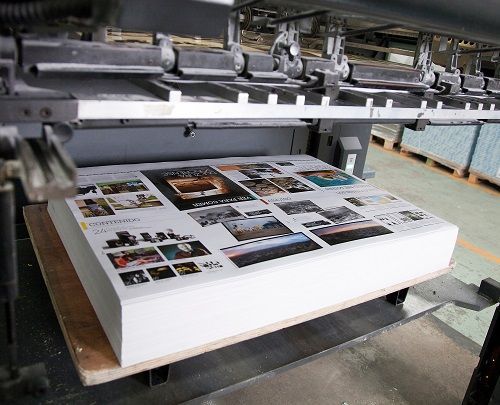
helps to know how a commercial print shop operates. We don't print a book's
pages one at a time. Instead, we print multiple pages onto larger sheets of
paper known as "parent sheets."
Using a process known as imposition, your book's pages are
arranged so that the maximum number of pages will fit onto each parent sheet.
Once printed, the parent sheets are trimmed down and the pages are bound into a
book.
The Golden Rule of Print Pricing: When your book's trim size
fits neatly onto standard parent sheets, there is minimal paper waste. The
press runs efficiently, taking fewer impressions to print the whole book.
Conversely, choosing an unconventional size that doesn't fit
our standard press sheet layouts will result in excess paper. Because this
offcut paper cannot be used, efficiency drops and production costs rise.
The 3 Cheapest Book Sizes to Print
While equipment can vary from shop to shop, standard parent
sheets in the US are fairly uniform. Because of this, the following three trim
sizes are recognized as the most cost-effective in commercial book printing:
1) 5.5" x 8.5" (Digest Size)
The 5.5" x 8.5" format is a powerhouse for print
efficiency. It lays out optimally on standard press sheets, making it one of
the most economical sizes you can choose.
Often referred to as "Digest Size," this compact
format is easy for readers to hold and carry. We regularly recommend 5.5"
x 8.5" for novels, memoirs, poetry collections, handbooks, and general
nonfiction. If you are a first-time self-publisher and want the safest, most
budget-friendly choice, this is an excellent starting point.
2) 6" x 9" (Trade Size)
If you walk into any bookstore, a large percentage of the
books on the shelves will be 6" x 9". Considered the standard
"Trade Size" in modern publishing, it is slightly larger than Digest
size but remains highly efficient to produce.
The 6" x 9" size offers a perfect balance of
readability, margin space, and manufacturing affordability. It gives fiction and
nonfiction titles a polished, retail-ready appearance. It is also an industry
standard for business books, cookbooks, textbooks, and self-published works.
3) 8.5" x 11" (US Letter Size)
Because 8.5" x 11" is the standard US Letter size,
almost all domestic printing and binding equipment is optimized to handle it
efficiently.
While you fit fewer pages on a single press sheet compared
to Trade or Digest sizes, the standard nature of the paper makes it incredibly
economical - especially for shorter book runs on digital presses. Because of its
larger format, the 8.5" x 11" size is ideal for content-heavy books
requiring wide margins, large images, and diagrams. We frequently print
workbooks, technical manuals, study materials, catalogs, and magazines at this
size.
The Key Takeaway for Your Print Budget
Think of printing like cutting shapes out of a sheet of
plywood. If you size your shapes correctly and arrange them logically, you can use
the whole board. However, if you don't plan ahead to optimize the yield, you could
end up throwing a lot of scrap in the dumpster. In printing, that
"scrap" is wasted paper, which gets figured into the cost of your book
project.
By designing your book at 5.5" x 8.5", 6" x 9", or 8.5" x 11", you optimize the flow of the printing process rather than fighting against it.
A Friendly Reminder from Our Prepress Team
Be sure to finalize your book dimensions before you start laying out the artwork for the cover and pages. This will save you major headaches later. Despite what you may think, changing your trim size down the road isn't a quick resize - it shifts margins, text flow, page numbers, chapter headings, image placements, and your spine calculation, often requiring the entire book to be reformatted from scratch.
Save yourself the time and effort of a rework by locking in your final dimensions before laying out a single page.
Need Help Choosing the Best Size for Your Book?
Every book project has unique requirements. At Color Vision Printing,
we believe in providing honest, pressure-free advice before you ever spend a
dime.
A quick review of your specs with a member of our team can
often uncover simple ways to reduce your costs. This applies whether you choose
a standard book size or require a totally custom dimension.
Let's talk about your project. Even if you are in the early
planning stages, getting expert input upfront ensures you make the most
cost-effective decisions.
- Use our simple Quote Request form to send us your specs to
get an emailed quote
- Prefer to talk live to a book printing expert? Give us a call at 800-543-6299.
We look forward to partnering with you on your next print
run.

Pete is a member of the Color Vision team and has nearly 20 years experience in printing, design, and marketing. He writes about a wide range of print-related topics, including book printing and binding, full-color printing, paper types, and finishing techniques. His articles contain simple, straightforward explanations, helping people to better understand their printing options and make more informed decisions about their projects.
Related Articles
The Most Popular “Punch and Bind” Methods for Creating Books
Read This Article
10 Frequently Asked Questions about Comb Binding
Read This Article
What is Saddle Stitch Binding?
Read This Article

Custom Book Printing: What is Perfect Binding?
Read This Article